Buy asapakademia.pl ?
We are moving the project
asapakademia.pl .
Are you interested in purchasing the domain
asapakademia.pl ?
domain@kv-gmbh.de · 0541-91531010
Buy asapakademia.pl ?
Why do constants disappear when differentiating?
Constants disappear when differentiating because the derivative of a constant is always zero. This is because a constant value does not change as the independent variable changes, so its rate of change is always zero. When taking the derivative of a function, the constant term does not affect the rate of change of the function, so it is essentially "ignored" in the differentiation process. **
Is integrating the opposite of differentiating?
No, integrating is not the opposite of differentiating. In mathematics, differentiation is the process of finding the derivative of a function, while integration is the process of finding the antiderivative of a function. These two processes are related, but they are not opposites. In fact, they are inverse operations of each other, meaning that integrating the derivative of a function will give you the original function. **
Similar search terms for Differentiating
Top-Angebote
Products related to Differentiating:
-
Perfect Picks Market Montessori Reusable Learning Cards Set For Kids Early Education Writing Practice Game Montessori Reusable Learning Cards Set For Kids Early Education Writing Practice GameTurn everyday learning into a fun, handson experience with these Montessori toys designed to spark curiosity and creativity. This engaging set of reusable cards helps young children build essential skills through play, making it perfect for early...39,97 $*Shipping: 0,00 $Secure redirect to the provider
-
Perfect Picks Market Kids Emotional Expression Mirror Early Education & Emotional Learning Toy For Toddlers blueNurture your childs emotional intelligence with the Kids Emotional Expression Mirrora fun, interactive learning tool designed to help toddlers understand and manage their feelings. This innovative toy features six emotional expression cards and a...49,97 $*Shipping: 0,00 $Secure redirect to the provider
-
Uplifted Finds Interactive Ring Toss Training System Professional Early Education & Pediatric Fitness Infrastructure Interactive Ring Toss Training System Professional Early Education & Pediatric Fitness InfrastructureCommand ultimate developmental confidence with the Interactive Ring Toss Training System, a highperformance educational solution specifically engineered to act as a comprehensive tool for elite organization and superior technical ergonomics. Built...52,97 $*Shipping: 0,00 $Secure redirect to the provider
-
Tiny Tots Teens Trends Bright Color Montessori Wooden Toys, Adorable Caterpillar Puppet, KTV Adults, Kids Early Education Learning Toy For Boys Bright Color Montessori Wooden Toys, Adorable Caterpillar Puppet, KTV Adults, Kids Early Education Learning ToyEnhance Learning with Montessori Wooden Toys Introduce your child to the world of interactive learning with our Montessori Wooden Toys. Designed to stimulate both cognitive development and creativity, these toys are perfect for early education. The...44,97 $*Shipping: 0,00 $Secure redirect to the provider




-
Why does the constant disappear when differentiating?
The constant disappears when differentiating because the derivative represents the rate of change of a function at a specific point, and the constant does not affect this rate of change. When taking the derivative of a function, the constant term does not contribute to the slope of the function and therefore does not affect the derivative. As a result, the constant term is essentially a vertical shift and does not impact the slope or rate of change of the function. **
-
Why does the constant term disappear when differentiating?
The constant term disappears when differentiating because the derivative measures the rate of change of a function at a specific point. Since a constant term does not change as the input variable changes, its rate of change is zero. Therefore, when differentiating, the constant term does not contribute to the slope of the function and is thus eliminated from the derivative. **
-
What is the product rule for differentiating the exponential function?
The product rule for differentiating the exponential function states that if you have two functions, f(x) and g(x), and you want to find the derivative of their product, (f(x) * g(x)), you can do so by taking the derivative of the first function (f'(x)) multiplied by the second function (g(x)), plus the first function (f(x)) multiplied by the derivative of the second function (g'(x)). In the case of the exponential function, if you have two exponential functions, such as e^x and e^2x, their derivative would be e^x * 2e^2x + e^x * 2e^2x. **
-
Why can't exponents with the same base be added when differentiating?
Exponents with the same base cannot be added when differentiating because the rules of differentiation do not allow for the addition of exponents. When differentiating a function with exponents, the power rule states that the exponent is brought down and multiplied by the coefficient, but the exponents themselves are not added together. This is because the process of differentiation involves finding the rate of change of a function with respect to its variable, and adding exponents with the same base does not accurately represent this rate of change. Therefore, exponents with the same base cannot be added when differentiating. **

Why is it that when differentiating a polynomial function, one degree is always lost?
When differentiating a polynomial function, one degree is always lost because the power rule of differentiation states that when you differentiate a term with a variable raised to a power, you decrease the power by 1. Since the degree of a polynomial is determined by the highest power of the variable, each term in the polynomial will decrease in degree by 1 when differentiated. This results in the loss of one degree overall when differentiating the entire polynomial function. **
How can one use polynomial division to find f''(x) and f'(3x) when differentiating?
One can use polynomial division to find f''(x) by first finding f'(x) using polynomial division, and then differentiating f'(x) to find f''(x). To find f'(3x), one can first substitute 3x into the polynomial function to get a new polynomial in terms of x, and then use polynomial division to find the derivative of this new polynomial with respect to x. **
Top-Angebote
Products related to Differentiating:
-
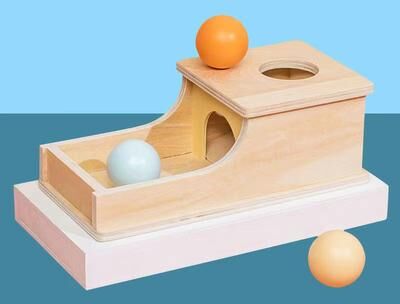
Tiny Tots Teens Trends Drawer Game Early Education Montessori Wooden Pitch Ball Box Preschool Learning Training Toy Drawer Game Early Education Montessori Wooden Pitch Ball Box Preschool Learning Training ToyThis Montessori Wooden Pitch Ball Box Drawer Game is a thoughtfully designed earlyeducation toy that transforms playtime into purposeful learning. Crafted for toddlers and preschoolers, it offers a handson, engaging way to support key developmental...39,97 $*Shipping: 0,00 $Secure redirect to the provider
-
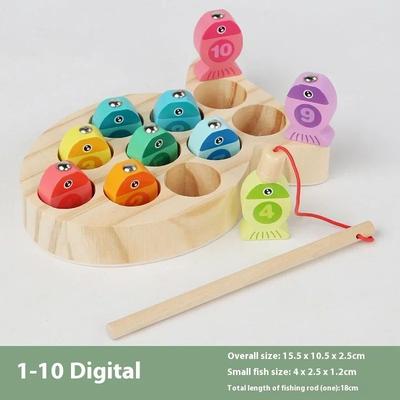
Inspire Select Wooden Montessori Fishing Toy Set Kids Number & Alphabet Learning Game For Early Education Training numbersMake learning fun and interactive with a playful educational experience. This Montessori fishing toy helps children develop essential skills while enjoying handson play. Designed for toddlers and young kids, this wooden learning toy combines...64,96 $*Shipping: 0,00 $Secure redirect to the provider
-
Perfect Picks Market Montessori Reusable Learning Cards Set For Kids Early Education Writing Practice Game Montessori Reusable Learning Cards Set For Kids Early Education Writing Practice GameTurn everyday learning into a fun, handson experience with these Montessori toys designed to spark curiosity and creativity. This engaging set of reusable cards helps young children build essential skills through play, making it perfect for early...39,97 $*Shipping: 0,00 $Secure redirect to the provider
-
Perfect Picks Market Kids Emotional Expression Mirror Early Education & Emotional Learning Toy For Toddlers blueNurture your childs emotional intelligence with the Kids Emotional Expression Mirrora fun, interactive learning tool designed to help toddlers understand and manage their feelings. This innovative toy features six emotional expression cards and a...49,97 $*Shipping: 0,00 $Secure redirect to the provider
-
Why do constants disappear when differentiating?
Constants disappear when differentiating because the derivative of a constant is always zero. This is because a constant value does not change as the independent variable changes, so its rate of change is always zero. When taking the derivative of a function, the constant term does not affect the rate of change of the function, so it is essentially "ignored" in the differentiation process. **
-
Is integrating the opposite of differentiating?
No, integrating is not the opposite of differentiating. In mathematics, differentiation is the process of finding the derivative of a function, while integration is the process of finding the antiderivative of a function. These two processes are related, but they are not opposites. In fact, they are inverse operations of each other, meaning that integrating the derivative of a function will give you the original function. **
-
Why does the constant disappear when differentiating?
The constant disappears when differentiating because the derivative represents the rate of change of a function at a specific point, and the constant does not affect this rate of change. When taking the derivative of a function, the constant term does not contribute to the slope of the function and therefore does not affect the derivative. As a result, the constant term is essentially a vertical shift and does not impact the slope or rate of change of the function. **
-
Why does the constant term disappear when differentiating?
The constant term disappears when differentiating because the derivative measures the rate of change of a function at a specific point. Since a constant term does not change as the input variable changes, its rate of change is zero. Therefore, when differentiating, the constant term does not contribute to the slope of the function and is thus eliminated from the derivative. **
Similar search terms for Differentiating
-
Uplifted Finds Interactive Ring Toss Training System Professional Early Education & Pediatric Fitness Infrastructure Interactive Ring Toss Training System Professional Early Education & Pediatric Fitness InfrastructureCommand ultimate developmental confidence with the Interactive Ring Toss Training System, a highperformance educational solution specifically engineered to act as a comprehensive tool for elite organization and superior technical ergonomics. Built...52,97 $*Shipping: 0,00 $Secure redirect to the provider
-
Tiny Tots Teens Trends Bright Color Montessori Wooden Toys, Adorable Caterpillar Puppet, KTV Adults, Kids Early Education Learning Toy For Boys Bright Color Montessori Wooden Toys, Adorable Caterpillar Puppet, KTV Adults, Kids Early Education Learning ToyEnhance Learning with Montessori Wooden Toys Introduce your child to the world of interactive learning with our Montessori Wooden Toys. Designed to stimulate both cognitive development and creativity, these toys are perfect for early education. The...44,97 $*Shipping: 0,00 $Secure redirect to the provider
-
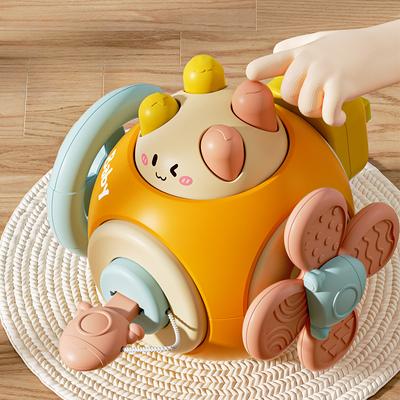
Tiny Tots Teens Trends Montessori Baby Training, Infant Puzzle Early Education Toys, Busy Hand Grasping Ball For Baby Montessori Baby Training, Infant Puzzle Early Education Toys, Busy Hand Grasping Ball For BabyIntroduce Your Baby to the World of Learning The Infant Puzzle Early Education Toys are designed to foster cognitive and physical development in your little one. This Multifunctional Busy Ball for Montessori Baby Training is ideal for enhancing...79,97 $*Shipping: 0,00 $Secure redirect to the provider
-
Perfect Picks Market Tumbler Wobbler Toys For Infant Boy Girl, Roly Poly Baby Toys Months Ideal For Early Education And Learning blueEncourage Your Babys Growth with Roly Poly Baby Toys Give your little one the perfect start with Roly Poly Baby Toys 6 to 12 Months. These tumbler wobbler toys are designed to engage infants, helping them build essential skills like balance,...31,97 $*Shipping: 0,00 $Secure redirect to the provider
-
What is the product rule for differentiating the exponential function?
The product rule for differentiating the exponential function states that if you have two functions, f(x) and g(x), and you want to find the derivative of their product, (f(x) * g(x)), you can do so by taking the derivative of the first function (f'(x)) multiplied by the second function (g(x)), plus the first function (f(x)) multiplied by the derivative of the second function (g'(x)). In the case of the exponential function, if you have two exponential functions, such as e^x and e^2x, their derivative would be e^x * 2e^2x + e^x * 2e^2x. **
-
Why can't exponents with the same base be added when differentiating?
Exponents with the same base cannot be added when differentiating because the rules of differentiation do not allow for the addition of exponents. When differentiating a function with exponents, the power rule states that the exponent is brought down and multiplied by the coefficient, but the exponents themselves are not added together. This is because the process of differentiation involves finding the rate of change of a function with respect to its variable, and adding exponents with the same base does not accurately represent this rate of change. Therefore, exponents with the same base cannot be added when differentiating. **
-
Why is it that when differentiating a polynomial function, one degree is always lost?
When differentiating a polynomial function, one degree is always lost because the power rule of differentiation states that when you differentiate a term with a variable raised to a power, you decrease the power by 1. Since the degree of a polynomial is determined by the highest power of the variable, each term in the polynomial will decrease in degree by 1 when differentiated. This results in the loss of one degree overall when differentiating the entire polynomial function. **
-
How can one use polynomial division to find f''(x) and f'(3x) when differentiating?
One can use polynomial division to find f''(x) by first finding f'(x) using polynomial division, and then differentiating f'(x) to find f''(x). To find f'(3x), one can first substitute 3x into the polynomial function to get a new polynomial in terms of x, and then use polynomial division to find the derivative of this new polynomial with respect to x. **
* All prices are inclusive of VAT and, if applicable, plus shipping costs. The offer information is based on the details provided by the respective shop and is updated through automated processes. Real-time updates do not occur, so deviations can occur in individual cases. ** Note: Parts of this content were created by AI.